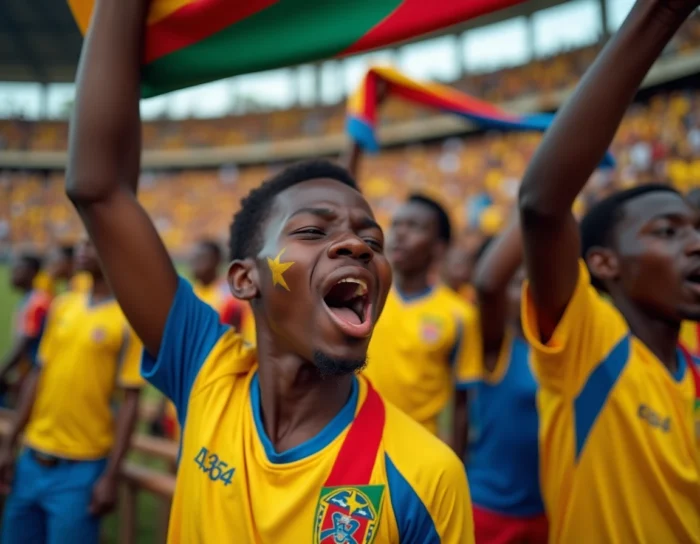
In the DRC, football is primarily experienced through sound. Even before a ball rolls on the pitch, the stands (or the streets around the stadium) produce a continuous soundscape, a mix of percussion, chants sung in unison, and rhythmic whistles. This vocal culture of Congolese supporters is not folklore: it structures the collective relationship to the match, influences the tempo of the game, and constitutes an intangible heritage passed down from generation to generation.
Drums and Polyrhythm: The Sound Mechanics of Congolese Stands
What strikes you in a Congolese stadium is the rhythmic architecture. The percussion does not serve as mere background noise. It imposes a temporal framework to which the chants layer on top.
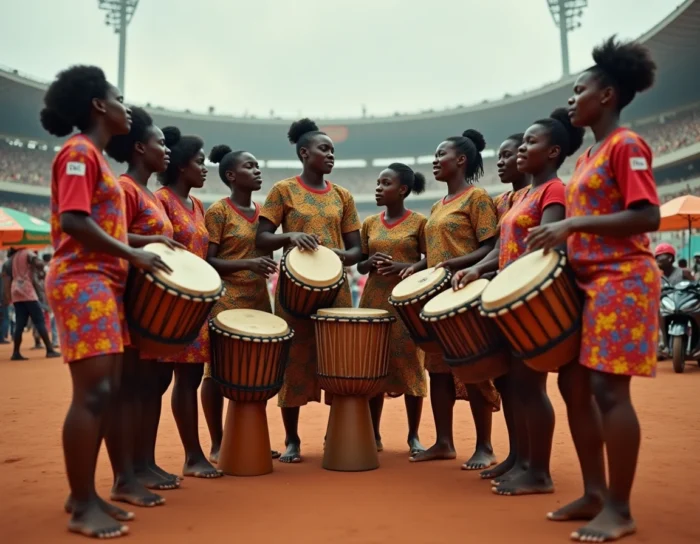
A group of leaders initiates a short melodic line, often in Lingala or Swahili depending on the region. The rest of the stand picks up the refrain in a staggered manner, creating an effect of vocal polyrhythm comparable to what is heard in traditional Central African music. The drums (often handmade barrels, sometimes simple metal cans) maintain the basic tempo.
This layering is not improvised. The most organized supporter groups rehearse their chants outside of match days. A repertoire builds up over the seasons, with refrains dedicated to a player, an opponent, or a specific moment in the match (goal, penalty, halftime).
To follow sports news on Ultra Sport, the sound dimension of Congolese football remains one of the most documented subjects by observers on the continent.
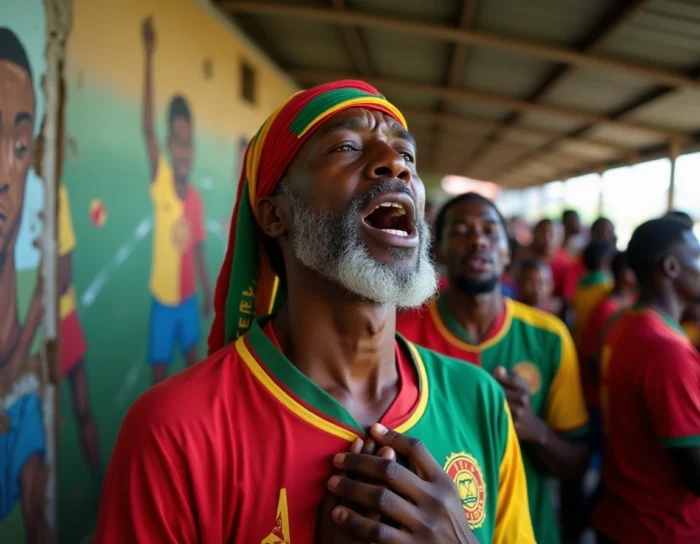
Supporter Chants in the DRC: Functions and Registers
The chants from the Congolese stands serve distinct functions depending on the context of the match. Three main registers emerge.
- The encouragement register: repetitive refrains, fast tempo, aimed at pushing the team during offensive phases. The text is often minimal (the club’s name, a short slogan) to facilitate collective repetition.
- The mocking or provocative register: chants targeting an opposing player or the referee. During international matches, Congolese supporters have, for example, chanted Messi’s name to unsettle Cristiano Ronaldo during a Portugal-DRC match, fitting into a tradition of sonic provocation shared by many supporter cultures around the world.
- The identity register: club anthems or chants with regional connotations, sung before kickoff or after a victory. These pieces, longer and more melodic, function as markers of belonging.
The ability to switch from one register to another in a matter of seconds, depending on the score or the intensity of the game, demonstrates remarkable collective coordination.
Behind Closed Doors and Fan Zones: Passion Reconfigured Outside the Stadiums
FECOFA has announced closed-door matches for the zonal phase of the 2026 Congo Cup. This decision cuts clubs off from the usual animation of the stands, depriving supporters of their main space for expression.
The direct consequence: the fervor shifts to public spaces. Bars, esplanades, roundabouts equipped with large screens become the new gathering places. The chants and drums do not disappear; they migrate. Several Congolese and African media document this relocation of atmosphere during international matches of the national team.
This street ambiance phenomenon alters the usual dynamic. In a stadium, the stands direct the sound towards the field. In an open space, the sound disperses in all directions, attracting passersby who swell the group. The snowball effect is real: a gathering of a few dozen people can, in one half, become a crowd of several hundred.
Stadium Accessibility: A Factor of Tension
The shift of passion to the street is not solely related to closed-door matches. The issue of ticket access also fuels frustration. FECOFA recently requested FIFA to refund tickets purchased for matches of the Congolese national team, some of which have become difficult to use for organizational reasons.
When access to the stadium becomes complicated, supporters find other ways to experience the match collectively. This adaptability is one of the distinctive traits of supporter culture in the DRC.
2026 World Cup and First Historic Point: A Catalyst for Atmosphere
The qualification and participation of the DRC in the 2026 World Cup have amplified the intensity of the fervor. Every match of the national team becomes a national event that far exceeds the sporting framework.
The first point obtained in the World Cup by the DRC triggered scenes of jubilation in several cities across the country. The streets of Kinshasa, Lubumbashi, and Goma transformed into open-air stands, with spontaneous processions accompanied by percussion and chants.
This historic context reinforces the role of supporters as actors in the national narrative. Congolese football is going through a pivotal period: the national team is stepping onto the world stage, but local stands are sometimes closed to the public. The tension between this collective pride and the constraints of stadium access produces an energy that channels into increasingly visible forms of expression in public space.
Football in the DRC remains inseparable from its sound dimension. Whether the stands are open or closed, the chants find their way. The ability of Congolese supporters to recreate a stadium atmosphere in a street, a bar, or at a roundabout tells a story that is larger than sport: a collective culture where shared sound takes precedence over individual comfort.