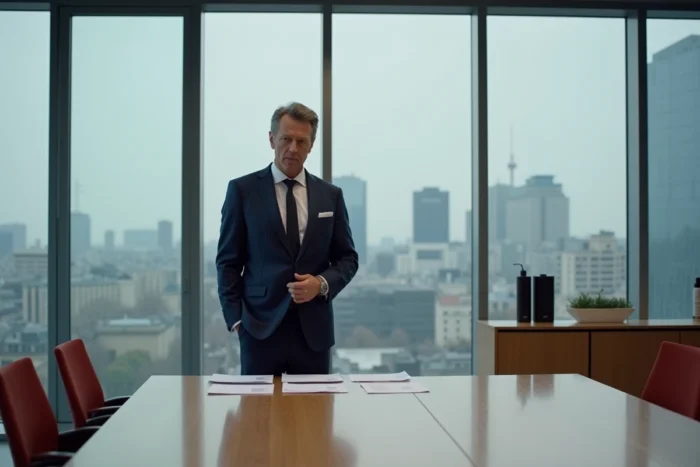
Nicolas Hieronimus has been leading L’Oréal since May 1, 2021. Born on January 3, 1964, in Paris, a graduate of HEC and ESSEC, he has spent almost his entire career within the group, climbing the ranks for nearly three decades before becoming the CEO. His career illustrates a model of internal promotion where deep knowledge of brands, markets, and innovation cycles has taken precedence over mobility between companies.
Acquisition of Kering Beauty: a Strategic Turning Point under Hieronimus’s Mandate
Nicolas Hieronimus’s mandate is primarily characterized by the way he articulates external growth, profitability, and regulatory constraints.
L’Oréal completed the acquisition of Kering Beauty on March 31, 2026. The operation includes Creed, as well as exclusive fifty-year licenses for Bottega Veneta and Balenciaga in beauty and fragrances. For a group already a global leader, absorbing an additional portfolio of luxury brands raises a direct operational question: how to integrate these new entities without diluting margins while complying with increasingly stringent cosmetic regulations in Europe?
By tracing the journey of Nicolas Hieronimus, one can see that his legitimacy in this type of arbitration is based on decades spent managing operational divisions, from mass market to luxury, including active cosmetics.
Cosmetic Regulation and Refillable Packaging: the Operational Equation
A rarely addressed aspect in analyses focused on the leader’s strategy concerns the increasing regulatory pressure on formulas and packaging. For several years, European requirements regarding allergen labeling have been tightening. The issue of PFAS in cosmetic products is also subject to gradual regulation.
On the ground, L’Oréal has directed its product dynamics towards refillable and eco-refillable packaging. Several brands in the portfolio now offer this format in skincare, fragrances, and facial care. This shift is not merely for show: it involves industrial investments, a redesign of certain production lines, and an adaptation of the supply chain.
Nicolas Hieronimus must therefore simultaneously manage the integration of new luxury brands, the rise of less profitable packaging formats in the short term, and compliance with rapidly evolving standards. The precise financial impact of this transition on each division remains to be documented, but the direction taken is clear.
Social Vision and Leadership Commitment at L’Oréal
Nicolas Hieronimus’s mandate is not limited to commercial and industrial decisions. L’Oréal has announced an additional commitment to its L’Oréal Fund for Women in 2026. This fund supports inclusion and employment access programs for women around the world.
This type of initiative reflects a broader trend in the management of large groups: leaders are expected to make measurable social commitments, not just focus on revenue growth. For Hieronimus, the question is how these investments align with the profitability priorities demanded by shareholders.
What a Lifetime Career at L’Oréal Reveals
Nicolas Hieronimus joined L’Oréal in the 1980s. He successively led the Garnier division, the mass market branch, and then the luxury division, before becoming deputy CEO. Nearly four decades in the same group is a journey that has become rare among CAC 40 leaders.
This longevity gives him granular knowledge of brands, distribution networks, and teams. However, it raises a legitimate question: can a leader trained exclusively within one ecosystem anticipate disruptions from outside, particularly the rise of independent brands driven by social media or the emergence of artificial intelligence in marketing?
External Growth and Profitability: the Concrete Trade-offs of Hieronimus’s Mandate
The acquisition of Kering Beauty is part of a strategy to consolidate the luxury and fragrance segment. The long-term licenses negotiated for Bottega Veneta and Balenciaga demonstrate a desire to lock in positions for several decades, not just to inflate the portfolio in the short term.
The trade-offs facing Nicolas Hieronimus can be summarized in three simultaneous tensions:
- Integrating new luxury brands while preserving their identity and price positioning, which requires a relative autonomy of creative teams
- Accelerating the transition to refillable packaging and formulas compliant with new European standards, without industrial cost overruns eroding operational margins
- Maintaining a visible level of social investment (L’Oréal Fund for Women, inclusion programs) in a context where every euro spent outside of commercial activity is scrutinized by the markets
This triple constraint distinguishes Hieronimus’s mandate from that of his predecessor Jean-Paul Agon, who also led major acquisitions but within a regulatory framework that was less stringent regarding formulas and packaging.
A Decision-Making Model Rooted in Long-Term Analysis
The choice of exclusive fifty-year licenses for luxury fashion brands reflects a long-term vision. Such a strategic decision requires a thorough analysis of the fragrance market, evolving consumer habits, and the group’s ability to keep these brands relevant across multiple generations of consumers.
Field feedback varies on the effectiveness of this approach. Some industry observers believe that very long licenses rigidify the portfolio. Others argue that they provide the necessary stability to build sustainable fragrance franchises, similar to what L’Oréal has achieved with other licensed brands.
Nicolas Hieronimus embodies a management style where strategic decision-making relies on accumulated internal knowledge rather than on industry benchmarks. This model produces measurable results over time, but its robustness in the face of rapid market changes remains an open question.