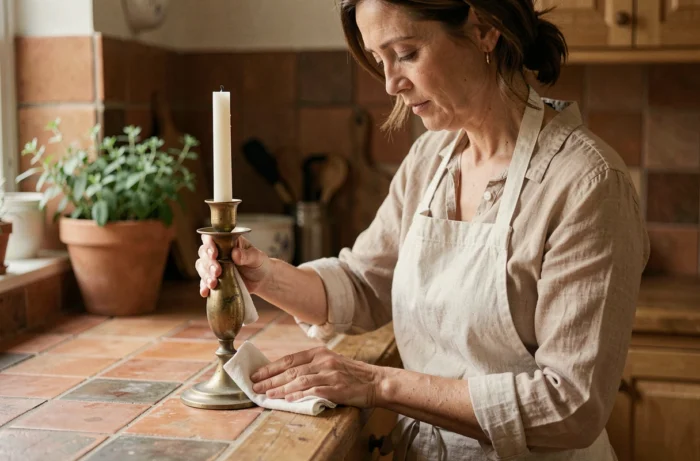
The brass of a door handle or candlestick may appear dull for weeks without anyone noticing. It only takes one invitation to make the grayish veil stand out. Making brass shine quickly takes less time than you think, as long as you choose the right method according to the type of piece to clean.
Varnished, raw, or plated brass: the diagnosis before the cloth
Before pulling out the vinegar or baking soda, ask yourself a simple question: is your brass object varnished, raw, or plated? The answer changes everything.
Varnished brass is covered with a clear protective layer. An abrasive product on varnished brass removes the varnish, not the dirt. Cleaning is limited to a soft, slightly damp cloth and mild soap. Nothing more.
Raw brass (unvarnished) is the one that patinas over time. This is the one that can be polished to regain its original golden shine. To recognize it, apply a magnet: brass is not magnetic. If the magnet sticks, the piece is likely made of steel plated with brass, and repeated polishing may risk going through the thin golden layer.
Contemporary finishes, such as brushed brass or PVD coating found on many recent faucets and handles, do not tolerate abrasive powders or acidic solutions not approved by the manufacturer. A damp microfiber cloth followed by quick drying remains the safest method. As detailed by Déco en Vogue’s home tips, adapting the gesture to the type of brass avoids many last-minute mishaps.
Making raw brass shine with pantry products
You have identified dull raw brass on your handles or decorative objects. Here are the two quickest methods using what you probably already have at home.
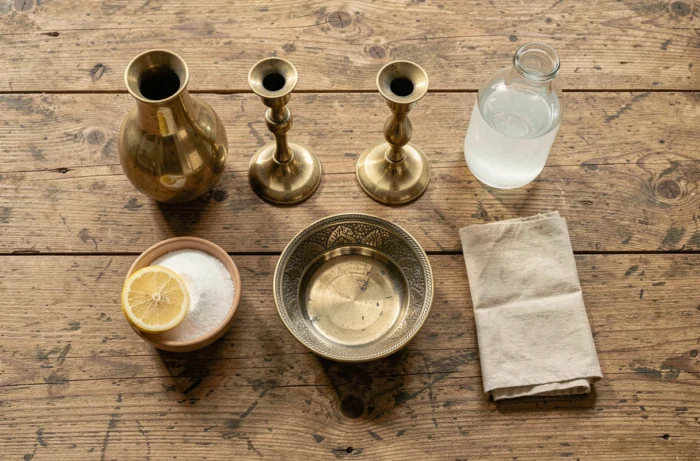
White vinegar and coarse salt
Mix one tablespoon of coarse salt in half a glass of warm white vinegar. Soak a soft cloth in this solution and rub the surface in small, regular circles. Acetic acid dissolves the oxidation layer while the salt acts as a very light abrasive.
Rinse with clear water as soon as the shine returns. Never let vinegar dry on brass, as it would leave more stubborn marks than the original patina.
Baking soda paste
For more stubborn stains or localized verdigris, form a thick paste by mixing baking soda with a few drops of water. Apply with your finger or a soft cloth on the oxidized areas. Let it sit for a few minutes, then gently rub.
Baking soda neutralizes the acidity of verdigris without scratching the metal, provided you do not use an abrasive sponge. Rinse thoroughly afterward.
Immediate drying: the step everyone forgets
Did you notice whitish rings on a brass faucet right after cleaning it? These are water marks. They appear when the surface is left to dry in the open air.
Drying brass immediately after each rinse prevents water marks. Use a clean, dry microfiber cloth, patting rather than rubbing. On shiny finishes (candlesticks, light fixtures), these water marks are particularly visible and give a dirtier appearance than before cleaning.
This precaution applies to all types of brass, including varnished brass. Hard water leaves a mineral film that dulls the surface within hours.

Protecting the shine of brass between receptions
Making brass shine takes just a few minutes. Keeping it shiny requires a preventive gesture. On freshly polished raw brass, several options slow down the return of oxidation:
- A thin layer of beeswax applied with a soft cloth creates a barrier against moisture and air, without altering the appearance of the metal.
- A clear spray varnish designed for metals offers more durable protection but requires stripping before the next polishing.
- A simple weekly wipe with a dry microfiber cloth removes fingerprints and dust before they settle in.
The regularity of maintenance matters more than the product used. Brass wiped down every week rarely requires intensive polishing.
Common mistakes that damage brass instead of making it shine
Some quick cleaning reflexes cause irreversible damage, especially when acting in haste before guests arrive.
- Using an abrasive sponge (green side) on polished or plated brass leaves visible micro-scratches in low light. Brass is a soft alloy that scratches easily.
- Applying ammonia or a multi-surface cleaner on brushed or PVD brass can permanently alter the finish.
- Letting an acid (lemon, vinegar) sit too long on the surface causes dark stains that are more difficult to remove than the initial oxidation.
- Rubbing plated brass with a polishing paste thins the golden layer and eventually reveals the underlying base metal.
The quickest and safest gesture remains the same: identify the type of brass, choose the appropriate product, rinse quickly, and dry immediately. A gentle cleaning of a few minutes restores the shine of your brass objects and handles until the next visit.