
Financing a new-build project involves more than a standard mortgage. Several schemes can reduce the overall cost, but combining them requires a clear understanding of each scheme’s eligibility requirements and income limits. Keeping your house-building budget under control starts with knowing how to make the most of these options.
Combining subsidised loans: how the rules fit together—and what product sheets don’t explain
A common approach is to list the available loans (PTZ, PAS, Action Logement loan) without explaining how they work together. The key technical point to remember is that the PTZ never covers the entire project. It finances only part of the cost, with the remainder covered by one or more complementary loans.
The social homeownership loan (PAS) can serve as the main loan alongside the PTZ. Its main advantage is that it can make borrowers eligible for APL homeownership assistance, reducing their net monthly payments. The PAS is subject to income limits, and the property must be the borrower’s primary residence.
The Action Logement loan, available to employees of private-sector companies with at least ten employees, offers a fixed rate of 1% excluding insurance, with a maximum loan amount of 30,000 euros over 25 years. Agricultural-sector employees may be eligible for an agri-accession loan of up to 40,000 euros. Both loans can be combined with the PTZ and PAS, provided the property complies with RE 2020.
We recommend checking your eligibility for each scheme before approaching banks, as your financing plan affects the rate on your main loan. Including a PTZ and an Action Logement loan in your application changes how the lending institution assesses your debt-to-income ratio, which may help you secure a more competitive offer. Our comprehensive guide to financial assistance for building a house explains the requirements for each subsidised loan.
PTZ for new builds: actual scope and eligible zones
The zero-interest loan has been extended until 31 December 2027, with revised income limits. The scheme remains reserved for first-time buyers, meaning people who have not owned their primary residence in the past two years (except in certain cases involving disability or a natural disaster).
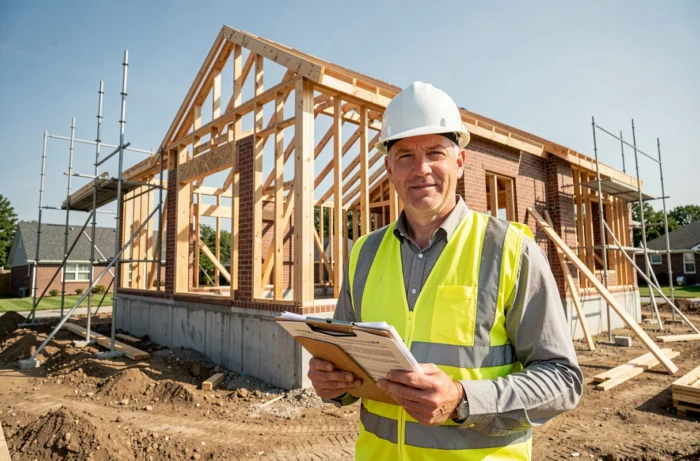
The PTZ can finance the construction of a new home, a purchase under the PSLA (social rent-to-own loan) scheme, or a purchase under a BRS (real solidarity lease). The property must become the borrower’s primary residence within one year of the work being completed.
The amount awarded depends on the geographical zone, household size and income. Income limits vary by bracket, and the repayment deferral can last several years for lower-income households. The official rules set limits for each zone (A bis, A, B1, B2, C), so you should check the classification of the municipality where the plot is located before running any estimates.
Property tax exemption and tax benefits for new builds
One option that is often underestimated when calculating the overall budget is the temporary property tax exemption for new builds. This exemption applies automatically for the first two years after the property is completed. Some municipalities and intermunicipal authorities extend it, sometimes for up to five years, for homes that meet energy-efficiency criteria.
You must apply to benefit from this exemption. The owner must submit a declaration (form H1) to the local property tax office within 90 days of the work being completed. Missing the deadline or failing to submit the form means losing the exemption.
Another tax measure worth knowing about is the tax-exempt family gift. Under certain donor age and gift-limit conditions, an ascendant can transfer money to help fund the construction of a primary residence. This scheme is separate from the standard gift tax allowances and allows funds to be added to a deposit without incurring additional tax.
Local construction grants: a patchwork of schemes to check municipality by municipality
Local authority grants are the least transparent part of the financing landscape. There is no comprehensive national database covering all municipal and intermunicipal schemes. The options vary by area:
- Direct homeownership grants, sometimes subject to income limits and a commitment to settle in the municipality long term (with a requirement to live there for several years).
- Municipal plots sold at controlled prices, with anti-speculation clauses prohibiting resale for a set period.
- Additional low-interest loans offered by some departments or regions, often combinable with the PTZ and PAS.
The only reliable approach is to contact the town hall for the municipality where the plot is located and the relevant ADIL (Departmental Housing Information Agency). Each municipality sets its own eligibility criteria, making generalisations unreliable.

APL homeownership assistance and CAF: a limited scheme that can be combined with other support
APL homeownership assistance is not widely known in the context of new builds. It works in much the same way as rental APL, but applies to repayments on a regulated loan (PAS or a standard regulated loan). The amount depends on household income, family size and the property’s location.
APL homeownership assistance applies only to regulated loans, not to a standard mortgage. The type of main loan you choose therefore determines whether you can access this assistance. A household that opts for a standard bank loan without regulated status loses this option, even if it meets the income requirements.
The CAF also offers home improvement loans, but these are for work on an existing property, not for new builds. Confusing the two schemes is a common mistake in financing estimates.
The cost of a new build depends as much on financial planning as on the choice of materials. A financing plan combining a PTZ, PAS, Action Logement loan and APL homeownership assistance can significantly reduce net monthly payments compared with a single loan. Checking the eligibility requirements for each scheme in each municipality remains the only way to ensure a sound financing plan.