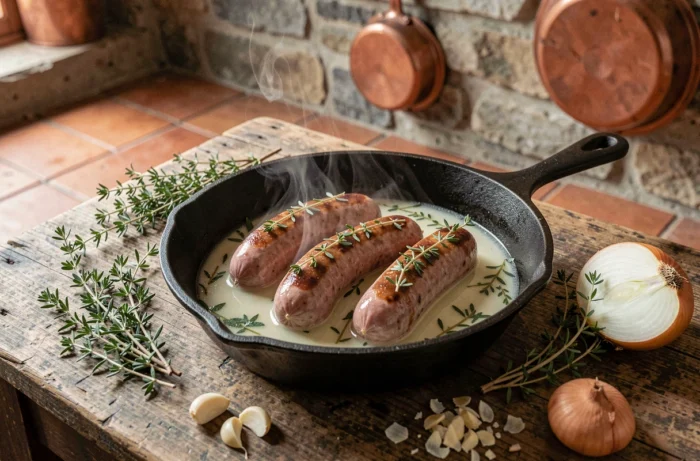
Pormonier is a Savoyard sausage that stands apart from classic charcuterie thanks to its mixed ingredients: pork, fat and a notable proportion of vegetables (Swiss chard, spinach, leek or cabbage, depending on the producer).
This distinctive blend gives it a more delicate texture than an all-meat sausage and calls for a few cooking precautions that online recipes rarely explain in detail. Production remains largely artisanal and seasonal, concentrated between autumn and spring, which explains why size and ingredients vary from one butcher to another.
Why pormonier is delicate and common cooking mistakes
The high vegetable content makes pormonier more prone to bursting during cooking than a standard pork sausage. A butcher in Chindrieux recommends a gentle simmer rather than a rolling boil, and advises against pricking the sausage before or during cooking. Piercing the casing releases the fat and moisture from the vegetables, drying out the meat instead of protecting it.
This delicacy directly affects the choice of cooking method: high-heat cooking (over an open flame or in a very hot pan) increases the risk of bursting. Getting the pormonier cooking time right means first accepting that this sausage needs patience, not high heat.
Size also varies from one producer to another. A thick pormonier from an artisan butcher will not cook in the same time as a thinner one bought at a market. Checking with the butcher is the first useful precaution, even before choosing a recipe.
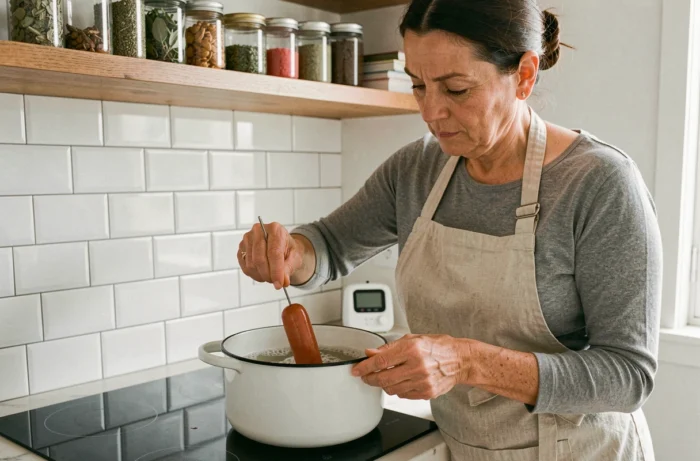
Cooking pormonier in a casserole with white wine: method and timing
Cooking pormonier in a casserole with white wine is the most widely documented method. It relies on slow simmering to protect the sausage from direct heat.
- Brown the pormoniers in a little butter or cooking fat over moderate heat, turning them gently until golden. This takes a few minutes on each side.
- Remove the sausages, then brown a mixture of diced onions, shallots and carrots in the same casserole.
- Return the pormoniers to the casserole, sprinkle with two tablespoons of flour and stir, then pour in the white wine (about half a litre for six sausages).
- Simmer over low heat for about forty minutes, keeping an eye on the sauce and adding a little water if it becomes too thick.
Bay leaves round out the aromatic blend. This cooking method works just as well for diots as for pormoniers, as the two are often prepared together in Savoyard tradition.
Why a casserole works better than a frying pan
The white wine creates a moist cooking environment that reduces the risk of bursting. Heat is distributed more evenly than in a frying pan, where direct contact with the hot base heats just one side of the sausage. The casserole also allows the sauce to thicken naturally with the flour and the cooking juices from the vegetables inside the pormonier.
Cooking pormonier in the oven on vine shoots
A less familiar method is to cook pormonier in the oven on dried vine shoots. Chef François Stefanaggi’s recipe, developed with pormoniers from Maison Baud, describes the process: preheat the oven to 170 degrees and cook for ten minutes. The vine shoots raise the sausage so it does not sit in its own fat, helping preserve its texture.
After taking it out of the oven, smoking adds another layer of aroma. Place a few dry vine shoots in a heatproof dish, set the pormonier on top, light the shoots and immediately cover the dish with a cloche to extinguish the flame and trap the smoke. Smoke for about thirty seconds, then remove the cloche in front of your guests. Organic hay or another untreated aromatic wood can be used instead of vine shoots.
This technique works for a standard-size pormonier. A thicker sausage may need a longer cooking time, but no source specifies timings beyond those given by Chef Stefanaggi.
Internal temperature and checking whether pormonier is cooked
Cooking times published in recipes are guidelines, not guarantees. The size of the pormonier, its starting temperature (straight from the fridge or at room temperature) and the actual heat of the stove or oven all affect the final result.
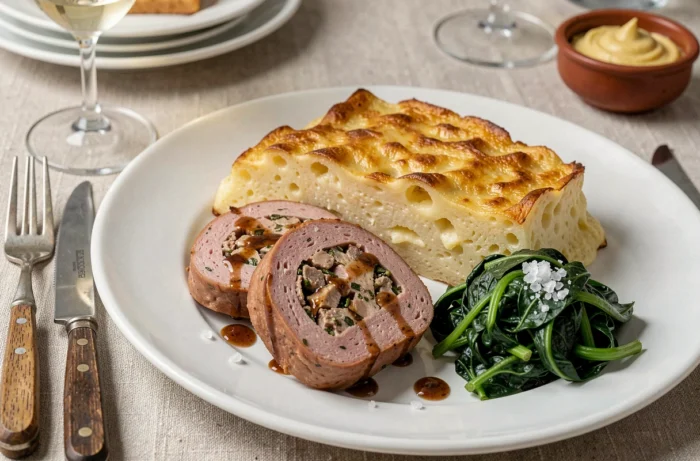
For fresh ground-meat sausages, the recommended internal temperature is 71 °C. A food thermometer is the most reliable way to check doneness without cutting into the sausage or repeatedly pricking it. Insert the probe into the centre of the thickest sausage.
Pormonier contains raw pork and raw vegetables, so undercooking poses a genuine food-safety risk. General food-safety recommendations apply, even though this Savoyard sausage is not always mentioned in official guides. A probe thermometer costs little and takes the guesswork out of cooking.
Traditional sides and variations for pormonier
Polenta is the side dish most often mentioned in Savoyard recipes. Chef Stefanaggi’s version features a light olive polenta, dispensed from a siphon with heavy cream, finely chopped spring onions and corn. It is a gourmet take on a mountain classic.
More homestyle versions pair pormonier with potatoes or with caramelised apples and onions, as in the recipe documented on Chef Simon. The sweet-and-savoury contrast of apples with the sausage’s richness works well, as long as the pormonier is not overwhelmed by an overly sweet topping.
Root vegetables (carrots, turnips) simmered in the white wine sauce round out the dish without making it too heavy. Vegetable soup served on the side is another option for a hearty winter meal centred on this Savoyard sausage.
Pormonier remains an artisanal product whose ingredients vary from one producer to another. Adjusting the cooking time to the size and origin of each batch, rather than following a single fixed timing, is the best way to ensure a tender sausage cooked through to the centre.