A used SUV attracts buyers with its size, high driving position, and versatility. Choosing the right model relies on checks that many buyers overlook, particularly regarding the mechanical components that endure more stress than those in a conventional sedan. Before signing, a few technical reflexes can help avoid a bad deal.
Suspension of a used SUV: the wear point to inspect first
On an SUV, the vehicle’s weight and higher ground clearance put greater strain on the suspension, brakes, and tires. A worn shock absorber isn’t always visible when stationary, but it can be felt as soon as you take the first turns.
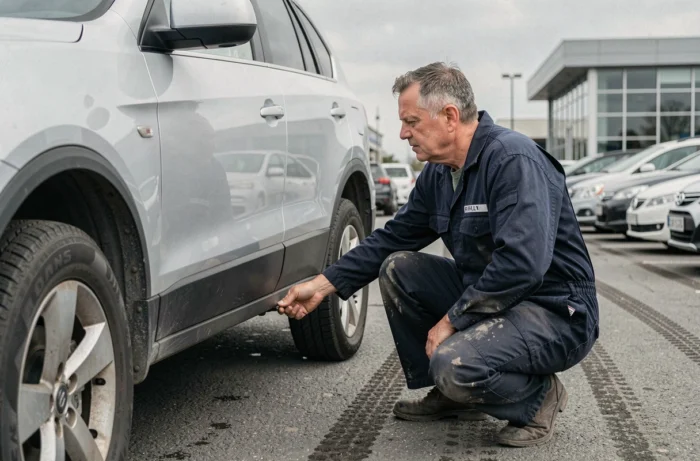
When examining a model, crouch down to wheel height. Check the tire wear: irregular wear indicates a geometry or suspension problem. New tires fitted on a high-mileage vehicle can also mask a recent defect.
Run your hand over the brake discs. A deep groove or noticeable warping indicates that the brake pads were changed too late. On an SUV, the simultaneous replacement of discs and pads represents a higher budget than on a lighter vehicle, as the parts are sized for greater weight.
Successfully buying a reliable used SUV involves this inspection of the suspension, which most guides merely mention without explaining what to specifically observe.

Abnormally low mileage on an SUV: why to be cautious
A mileage display showing very few kilometers for the vehicle’s age seems reassuring. In practice, it’s a signal that deserves questions.
Too low mileage may indicate a long period of inactivity. An SUV that has been stationary for several months develops specific issues: dried seals, degraded battery, weakened brake hoses. These defects do not appear on a standard technical inspection report.
Always ask for maintenance invoices. A well-maintained vehicle shows regular interventions spaced out in a coherent manner. If the logbook shows an oil change at the time of registration and then nothing for three years, caution is warranted.
The specific case of hybrid and electric SUVs
On a hybrid or electric SUV, the condition of the traction battery becomes a key purchasing criterion. The usual contents focus on the combustion engine and mileage, but the residual capacity of the high-voltage battery determines the real range and resale value.
Some manufacturers offer a battery diagnostic at the dealership. This test measures the remaining capacity compared to new condition. A result below a certain threshold may justify a frank negotiation on the price, or simply the rejection of the vehicle.
Warranty and documents: what the price doesn’t reveal
Why do two seemingly identical SUVs sell for very different prices? Often, the answer lies in the documents accompanying the sale, not under the hood.
Here are the elements to check before any negotiation:
- The registration document must match the seller. A vehicle sold by someone who is not the registered owner complicates the process and may hide a legal issue.
- The technical inspection report must be less than six months old for a private sale. Read each observation: cumulative minor defects (steering play, slight leak, corrosion) provide a realistic picture of the actual condition.
- The complete maintenance history, with dated invoices, proves that the revisions were carried out within the timeframes prescribed by the manufacturer. A stamped logbook without associated invoices is not sufficient.
- The remaining warranty, whether manufacturer or contractual, offers concrete protection. On an SUV less than five years old, an active manufacturer’s warranty covers major repairs that regular maintenance does not prevent.
A seller who refuses to provide these documents or hesitates to show them already gives you valuable information.

Test drive of a used SUV: structuring the route
A trip around the block reveals nothing. To evaluate a used SUV, the test drive must replicate your actual usage conditions.
Start with a cold start. The engine should run smoothly without any metallic noise in the first few seconds. A knocking sound on a cold start in a diesel may indicate an injector issue, which is an expensive repair.
What each type of road teaches you
In the city, focus on the steering and gearbox. Excessive play in the steering wheel or a difficult gear shift can be detected at low speed. On open roads, gradually increase the revs: a reliable SUV does not vibrate and does not pull to one side when braking.
If possible, take an unpaved road for a few hundred meters. Suspension noises, body creaks, and behavior on uneven terrain become immediately apparent. An SUV with worn shocks will bounce excessively over bumps.
During the test, turn off the radio and ventilation. Background noises are your best indicators: turbo whistling, joint knocking, wheel bearing humming. Each of these sounds corresponds to a part and a quote.
Prefer a test drive of at least twenty minutes. Thermal defects, such as an abnormal rise in engine temperature or a suspicious smell when hot, only manifest after sufficient driving.
The market for used SUVs remains broad, with models at all prices and in all engine types. This diversity benefits the patient buyer who takes the time to compare histories, test thoroughly, and read every line of the technical inspection. A well-documented vehicle, with a healthy suspension and a valid warranty, remains the best compromise between a controlled budget and peace of mind on the road.