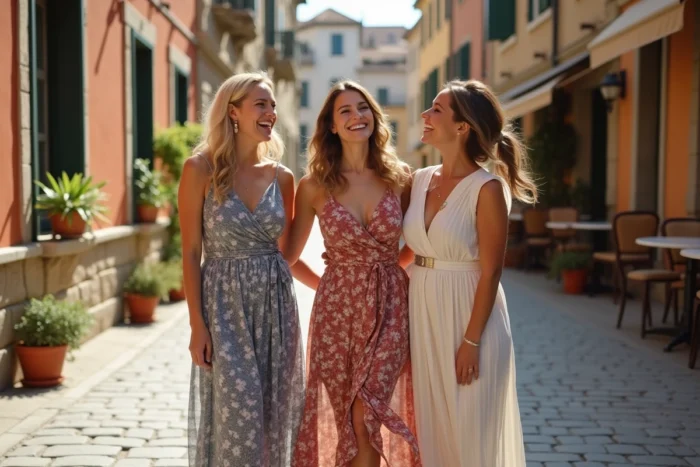
Wearing a dress every day changes the way one perceives their silhouette, comfort, and the time spent getting dressed. Between practicality, freedom of movement, and versatility in the wardrobe, the arguments go beyond mere aesthetics. Here are five concrete reasons, analyzed from the perspective of comfort, style, and real usage.
1. Time-saving in the morning: one piece replaces pants and top
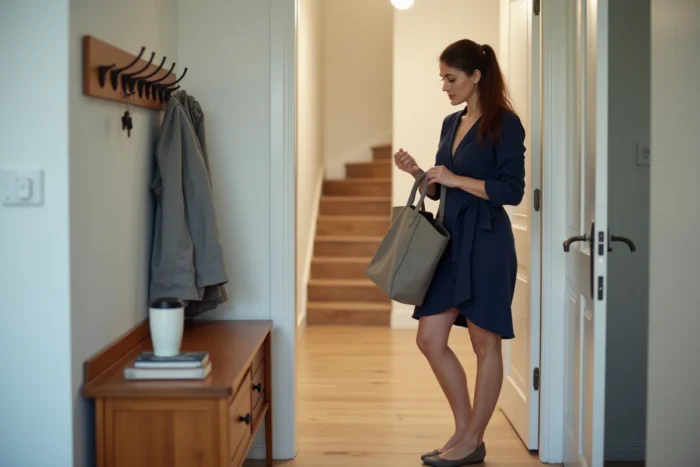
Putting together an outfit with jeans, a matching top, and the right accessories takes several minutes each morning. A dress eliminates this step: slipping on a single piece is enough to achieve a complete look.
Several recent brands emphasize this argument of simplicity and speed in daily life. The dress is described as an “easy to wear” piece that allows for a look to be put together in seconds, without thinking about clothing combinations.
For those who are unsure about the cuts that suit their body shape, understanding why to choose Caro Bleue Violette provides useful insights on models that simplify daily dressing.
| Criterion | Pants + top outfit | Dress only |
|---|---|---|
| Number of pieces to coordinate | 2 to 3 minimum | 1 only |
| Estimated dressing time | Longer (multiple choices) | Shorter (single choice) |
| Space in the wardrobe | Two separate categories | One single category |
| Ease of day/night transition | Often a complete change | One accessory is enough |
2. Thermal comfort in summer: fluid fabrics and freedom of movement

Summer heat makes wearing jeans or tight pants significantly less pleasant. Dresses made from fluid and lightweight fabrics allow air to circulate around the legs, which reduces the feeling of heat on the skin.
This point is not trivial. The discourse around dresses has evolved: they are no longer sold solely as aesthetic pieces but as a solution for thermal comfort and freedom of movement. Materials like linen, lightweight cotton, or fine satin enhance this feeling of ease.
However, not all dresses are equal in this regard. A fitted polyester dress provides less ventilation than a flared cotton cut. The choice of material and cut directly influences the level of real comfort.
3. Versatility between life contexts: office, city, and evening
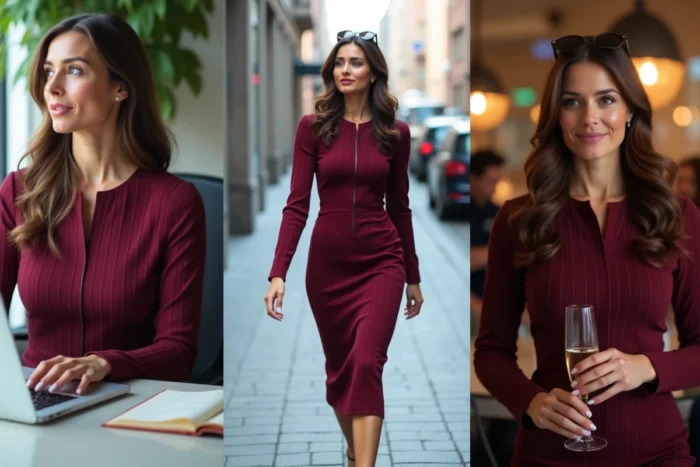
One of the most concrete arguments in favor of dresses is their ability to transition between multiple life contexts without a complete outfit change. The same model worn at the office with flat shoes works for an evening out with heels and different jewelry.
Recent fashion pages describe the dress as a piece designed to transition from work to a casual outing, from the beach to the city. This versatility limits the number of pieces needed in the wardrobe.
- At the office: a short-sleeved straight dress with a light jacket gives a professional look effortlessly
- In the city: the same dress without a jacket, with sneakers, becomes a casual outfit
- In the evening: a change of accessories (bag, shoes, jewelry) is enough to transform the look
This logic also reduces clothing budgets. Fewer pieces to buy to cover more situations.
4. Assertion of personal style beyond the classic register
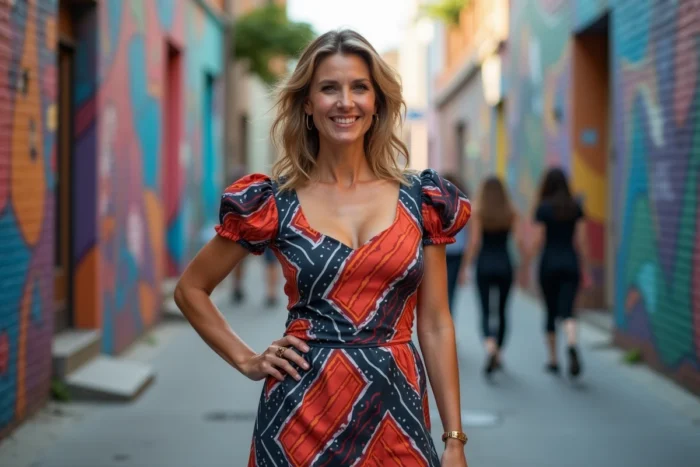
The dress is no longer confined to an exclusively feminine or classic register. Paired with a leather jacket, ankle boots, or a structured bag, it shifts towards a mixed, even androgynous style, expanding the realm of possibilities.
This changes the game for those who associated dresses with a too-conventional dress code. Wearing a flowing dress with sneakers and an oversized jacket creates a visual contrast that asserts a personal style without following a fixed trend.
Testimonials collected on forums show that some women notice a change in their gait and posture when wearing a dress. This feeling, subjective but recurring, contributes to a different perception of oneself in public space.
5. Adaptation to all body shapes thanks to the diversity of cuts
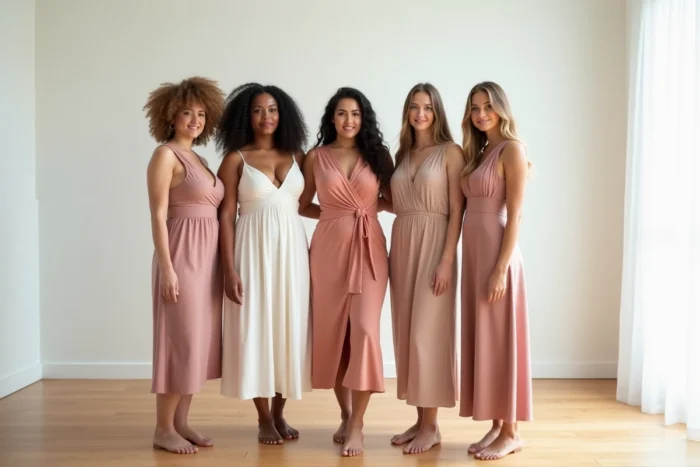
The market now offers a sufficiently wide range of cuts for every silhouette to find a suitable model. Straight, flared, wrap, trapeze: each shape responds to a different logic of enhancement.
- The wrap cut emphasizes the waist and suits hourglass or inverted triangle shapes
- The trapeze dress floats from the shoulders and frees the belly, ideal for O-shaped bodies
- The straight dress structures the silhouette without molding it, suitable for H-shaped bodies
- The flared cut from the waist balances the hips for A-shaped bodies
This diversity means that abandoning the jeans-t-shirt reflex does not require conforming to a standard silhouette. Every body shape has dress cuts designed for it, making the transition to wearing dresses accessible without compromising on comfort or appearance.
Dresses suited to different body shapes are also increasingly available from plus-size brands, removing a historical barrier to their daily adoption.
The choice to wear a dress every day is based on measurable criteria: dressing time, number of pieces in the wardrobe, thermal comfort, versatility of use. Every body shape finds its cut, and every life context, from the office to the evening, accommodates a simple change of accessories.